
Lean-To vs Freestanding Pergola: Which Is Best

Choosing between a lean-to and a freestanding pergola can feel surprisingly difficult once you start planning your outdoor space. Both options can add shade, structure, and style. But the right choice depends on how you use your garden, where you want shelter, and how connected you want the pergola to feel to your home.
- What Is a Lean-To Pergola?
- What Is a Freestanding Pergola?
- Lean-To vs Freestanding Pergola: Key Differences
- What is the difference between a lean-to and freestanding pergola?
- Pros and Cons of Lean-To Pergolas
- Pros and Cons of Freestanding Pergolas
- Cost Comparison
- Installation Differences
- Which Pergola Works Best for Different Homes?
- How to Choose the Right Pergola for Your Home
For some homeowners, a pergola for patio use makes the most sense when it is attached to the house. It creates a natural extension of the kitchen or living area and helps the patio feel more usable in changeable weather. For others, a freestanding pergola is the better fit because it can define a separate seating area, dining zone, or focal point in the garden.
What Is a Lean-To Pergola?
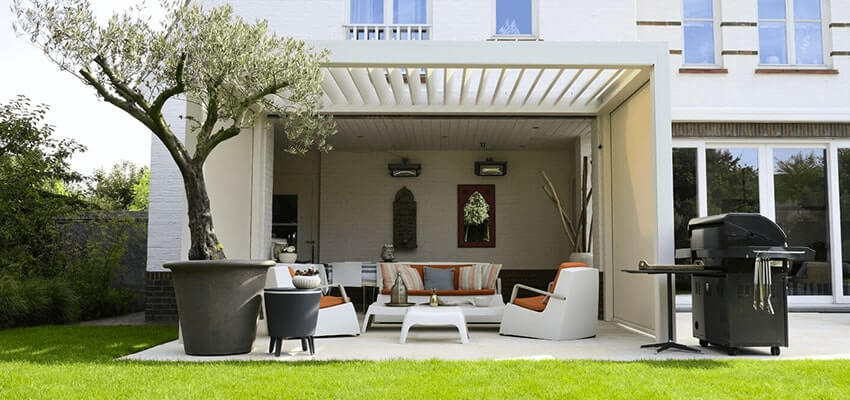
A lean-to pergola is a structure that attaches directly to the wall of a house or building on one side, with posts supporting the outer edge. Because it is fixed to the property, it is often called an attached pergola.
In practical terms, a lean-to pergola works a bit like a sheltered extension of your home. It sits neatly over a patio, terrace, or paved area and creates cover exactly where many homeowners already spend time.
Key features of a lean-to pergola
- Attached to the house wall
- Usually supported by two or more front posts
- Ideal for patios and paved areas close to the home
- Creates a more integrated indoor-outdoor feel
- Often chosen where space is limited
Typical placement is directly outside rear doors, bifolds, kitchens, or dining rooms. That is one reason lean-to structures appeal to homeowners who want easier everyday use of their outside space. A patio cover product such as the Brustor B128 is designed specifically as an attached solution, offering a slim aluminium frame, optional screens, and home-connected shelter for patio areas.
What Is a Freestanding Pergola?
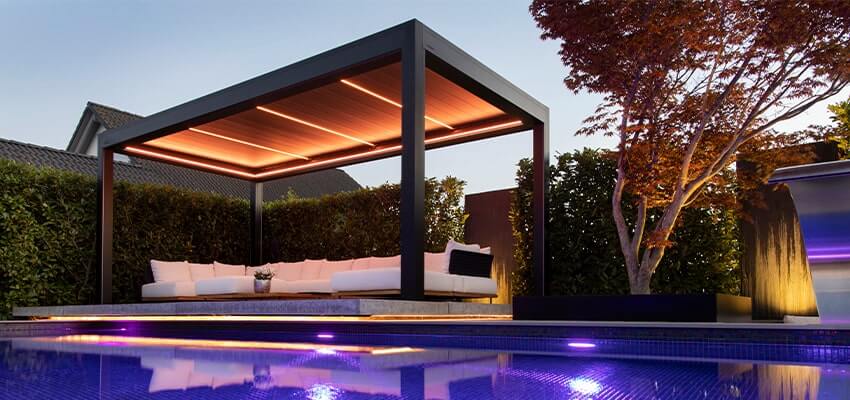
A freestanding pergola is a self-supporting structure with posts on all sides. Unlike a lean-to pergola, it does not rely on a wall for support.
That gives you much more freedom over placement. You can position it over a deck, in the middle of a garden, beside a pool, or at the far end of the lawn to create a separate outdoor destination.
Key features of a freestanding pergola
- Fully independent structure
- Can be placed away from the house
- Works well as a focal point
- Good for zoning larger gardens
- Suitable for dining, lounging, or entertaining areas
Typical placement includes garden terraces, decking, outdoor kitchens, and feature seating areas. Freestanding pergolas are often chosen when homeowners want the garden itself to feel more purposeful, not just the patio closest to the house.
Lean-To vs Freestanding Pergola: Key Differences
Here is a quick comparison of the main pergola types.
| Feature | Lean-To Pergola | Freestanding Pergola |
|---|---|---|
| Structure | Attached to the house | Independent, stands alone |
| Best for | Patios next to the home | Gardens, decks, feature areas |
| Space needed | Usually suits smaller spaces | Better for medium to large spaces |
| Visual effect | Feels like a home extension | Creates a separate outdoor zone |
| Placement flexibility | More limited | Much more flexible |
| Installation | Requires secure wall fixing | Requires full structural support |
| Weather access | Convenient from indoors | Can be farther from the house |
| Lifestyle fit | Daily use, easy access | Destination space, entertaining |
What is the difference between a lean-to and freestanding pergola?
A lean-to pergola attaches to your house and is best for patios and smaller spaces close to the home. A freestanding pergola stands independently and is better for gardens, decks, and larger outdoor areas where you want more flexibility in placement.
Pros and Cons of Lean-To Pergolas
A lean-to pergola can be the most practical option when you want shelter exactly where you step outside.
Pros
- Excellent for patios
If you want a pergola for patio dining, coffee mornings, or family seating, attached designs are often the most convenient. - Feels connected to the house
It creates a seamless flow from indoors to outdoors, which many homeowners prefer. - Can suit smaller gardens
Because it sits against the property, it makes efficient use of compact space. - Useful in mixed weather
Being close to the house means you are more likely to use it often, even for short periods. - Clean, integrated appearance
Many modern aluminium designs look neat and understated rather than bulky. The Broadview B128 positioning emphasises a discreet, minimal solution for patio spaces.
Cons
- Less flexible placement
You can only install it where the property allows. - May not suit every wall or layout
Doors, windows, soffits, drainage, and wall condition can all affect design. - Can feel less like a garden feature
If you want a destination at the bottom of the garden, a lean-to may not deliver that effect. - Limited independence
It is tied visually and structurally to the house, which may not suit every aesthetic goal.
Pros and Cons of Freestanding Pergolas
A freestanding pergola gives you more design freedom and can transform how the garden is used.
Pros
- Flexible placement
You can position it where the sun, views, and layout work best. - Ideal for larger gardens
It helps break up open space and create an outdoor room. - Strong visual focal point
This is useful if your garden feels unfinished or lacks structure. - Good for entertaining
A freestanding pergola can define a dining or lounge area away from the house. - Works with more garden pergola ideas
From outdoor kitchens to spa zones and firepit seating, there is more scope.
Cons
- Needs more space
In a small courtyard or compact patio, it may feel oversized. - Can cost more overall
More posts, groundwork, and separate access routes may add to the budget. - Less convenient for everyday use
If it is set away from the house, you may use it less in winter or rain. - Can require more planning of services
Lighting, heating, and electrics may need longer runs if the pergola sits deeper in the garden.
Cost Comparison
When people compare lean-to vs freestanding pergola options, cost is often one of the first questions.
There is no single fixed price because cost depends on size, materials, roof design, finish, groundwork, and extras such as lighting, screens, or heaters. But in general, these are the main patterns:
Lean-to pergola costs are often lower when:
- The size is modest
- The patio is already in good condition
- The wall fixing is straightforward
- No major groundworks are needed
Freestanding pergola costs can be higher when:
- The structure is larger
- Extra foundations are required
- The site is farther from power or drainage
- You are creating a full garden room effect
That said, cost should be judged against use. A slightly higher spend can still be better value if the pergola transforms an unused part of the garden into somewhere you genuinely enjoy.
Homeowners who prioritise long-term reliability and low maintenance often lean towards aluminium rather than timber, especially when they want to avoid repainting, rot treatment, or repeated repairs. That practical preference shows up strongly in the supplied persona research.
Installation Differences
Installation is another important difference between pergola types.
Lean-to pergola installation
A lean-to pergola needs a suitable wall or facade to attach to. Installers will assess:
- Structural fixing points
- Height and pitch
- Door and window clearance
- Drainage
- Patio levels
The upside is that the footprint can be simpler because one side is supported by the building.
Freestanding pergola installation
A freestanding pergola requires all support points to be planned independently. That usually means:
- Accurate foundation positions
- Level ground or base preparation
- Full structural support from the ground up
- Careful placement for access, views, and sun direction
If you are creating a premium outdoor living area with lighting, heaters, or screens, installation can become more involved. In the Southampton case study, the project included electrics, drainage, motorised screens, lighting, and patio works as part of one integrated solution.
Which Pergola Works Best for Different Homes?
Small patios
A lean-to pergola is often the better choice for a small patio. It uses available space efficiently and makes the area feel like part of the home rather than a separate structure squeezed into the garden.
Large gardens
A freestanding pergola usually works better in a large garden. It helps zone the space and creates a stronger visual anchor.
Decks
Either can work, depending on where the deck sits. If the deck is attached to the rear of the property, a lean-to pergola may feel more natural. If the deck sits farther out in the garden, a freestanding pergola is often the better match.
Garden spaces
For a reading corner, outdoor dining terrace, or garden retreat, a freestanding pergola often gives more freedom. For day-to-day shade outside the kitchen or lounge, a lean-to pergola is usually more practical.
How to Choose the Right Pergola for Your Home
If you are still deciding between an attached pergola vs freestanding pergola, ask yourself these questions:
- Where do you want to spend time?
If the answer is “right outside the back doors,” a lean-to pergola may suit you best. If you want to draw people into the garden, consider freestanding. - How much space do you have?
Smaller patios often favour attached models. Larger plots offer more freedom for freestanding designs. - Do you want a home extension feel or a garden feature?
A lean-to feels connected and practical. A freestanding pergola feels more like a destination. - What is your maintenance preference?
Many homeowners now prefer aluminium because it is lower maintenance than timber and tends to align better with long-term reliability goals. That concern appears repeatedly across the supplied customer personas, especially among buyers who want durability, a tidy appearance, and less annual upkeep. - What matters most: convenience or flexibility?
Choose convenience and easy access, and lean-to often wins. Choose design flexibility and zoning, and freestanding often comes out ahead.
In many cases, there is no universally better option. There is only the one that fits your home and habits better.
FAQ Section
Is a lean-to pergola cheaper than a freestanding pergola?
Often, yes, but not always. Lean-to pergolas can be more cost-effective because they use the house for support and often suit smaller footprints. Final cost still depends on size, materials, and features.
Which pergola is best for a patio?
A lean-to pergola is usually best for a patio directly outside the house. It provides convenient shelter and creates a strong indoor-outdoor connection.
Can a freestanding pergola go next to a house?
Yes. A freestanding pergola can sit close to the house, but it does not need to attach to it. This can be useful if wall fixing is not practical.
Is a freestanding pergola stronger than a lean-to pergola?
Not necessarily. Strength depends more on design, materials, engineering, and installation quality than whether the pergola is attached or freestanding.
Which pergola type is better for a garden feature?
A freestanding pergola is usually better if you want a focal point or separate seating zone within the garden.
Ready to choose the best pergola for you?
When comparing lean-to vs freestanding pergola options, the best choice comes down to how you live outdoors.
Choose a lean-to pergola if you want shelter directly outside your home, have a smaller patio, or want the space to feel like a natural extension of the house.
Choose a freestanding pergola if you want more flexibility, have a larger garden, or want to create a dedicated destination for dining, lounging, or entertaining.
For many homeowners, the decision is less about which pergola type is better in general and more about which one makes your garden easier to use, more comfortable, and more enjoyable throughout the year. If you start with your layout, daily habits, and long-term priorities, the right answer usually becomes much clearer.
You won’t regret choosing a covered pergola from Broadview. Contact us today to discuss your requirements – we are happy to provide advice and guidance on all of our garden shading products.


